App · Web, iOS and Android
A group-challenge app live the day after the idea, and a website where every figure is sourced
Challenge Us was born on 1 September 2026 from a two-person bet: a hundred push-ups a day. The next day, the app was running in the browser. Five weeks later it had gone through more than a hundred versions, and its website was publishing 93 articles where no figure appears without its source.
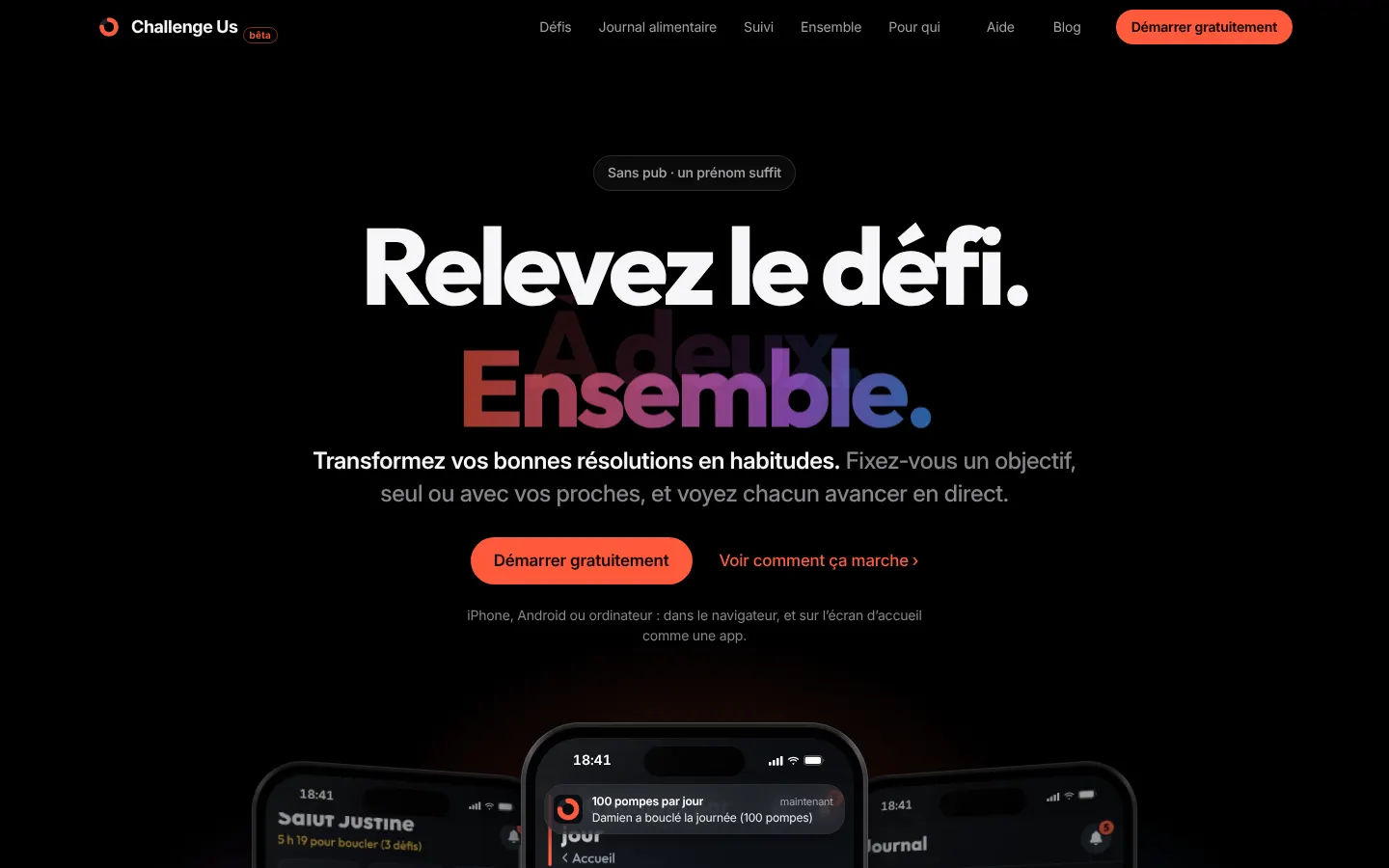
Key figures
1 day
from idea to live app
Version 1.0 released on 2 September 2026
108
versions released in 5 weeks
Up to 1.58.3 on 6 October 2026
93
articles published
703 sources cited in footnotes
48
help pages
One question per page
Operational figures taken from the project's own tools. We publish no sales or traffic figures without their owner's consent.
The starting point
The need was simple: set a goal as a group, log your day, see everyone else’s live, with no complicated sign-up. And do it fast, before the motivation faded.
To get known without advertising, it also needed a useful website on habits, motivation and attention, topics where many false figures circulate.
What we did
One codebase for three platforms
Web, iPhone and Android share the same code, with a real-time back end. The installable web version serves the first users while the store version is being prepared.
Rules enforced by the server
The day is computed in each participant’s time zone, the phone clock cannot be used to cheat, and every entry is kept so the history stays verifiable.
A frictionless start
A first name is enough to begin; email or a recovery code are optional. Invitations go through a link or a code.
A publisher’s pace, without breakage
Every change is checked automatically and previewed online before it is released, and a release log can be read inside the app.
A sourced content site
A research AI gathers the material, every reference is reopened at the source with a verdict (solid, needs nuance, fragile, myth), Claude drafts, a human reviews, and the site refuses to publish with a dead link.
In pictures
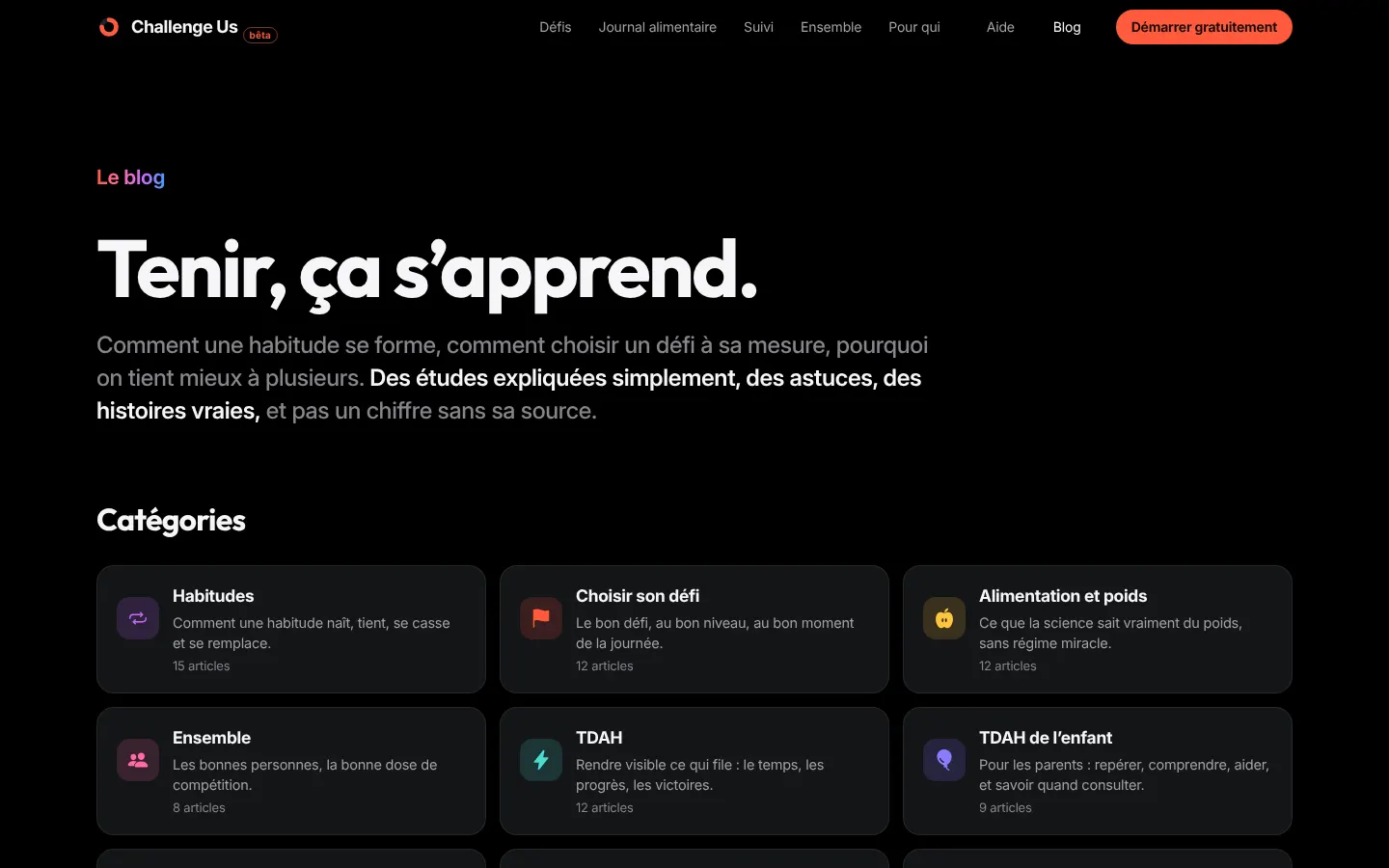
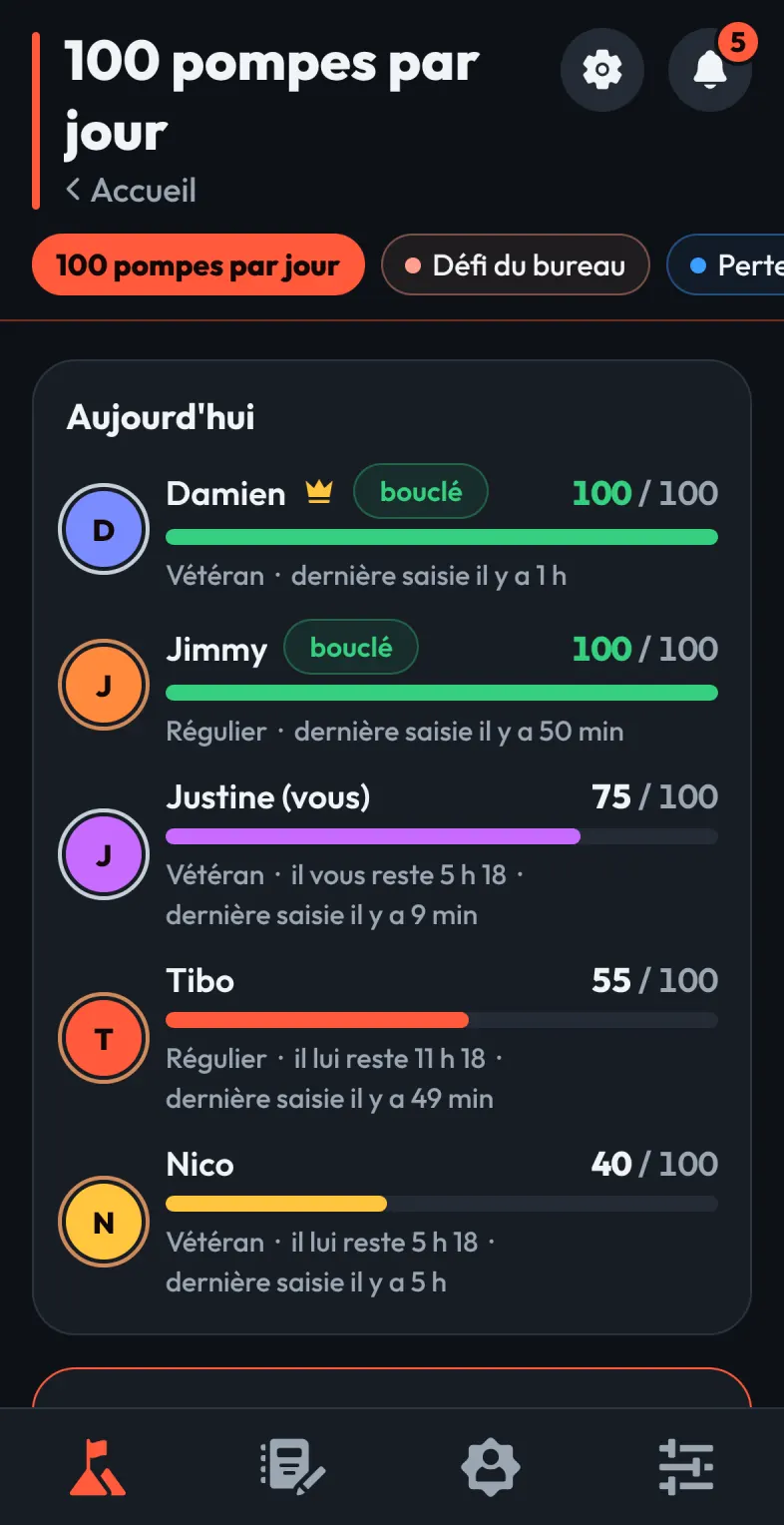
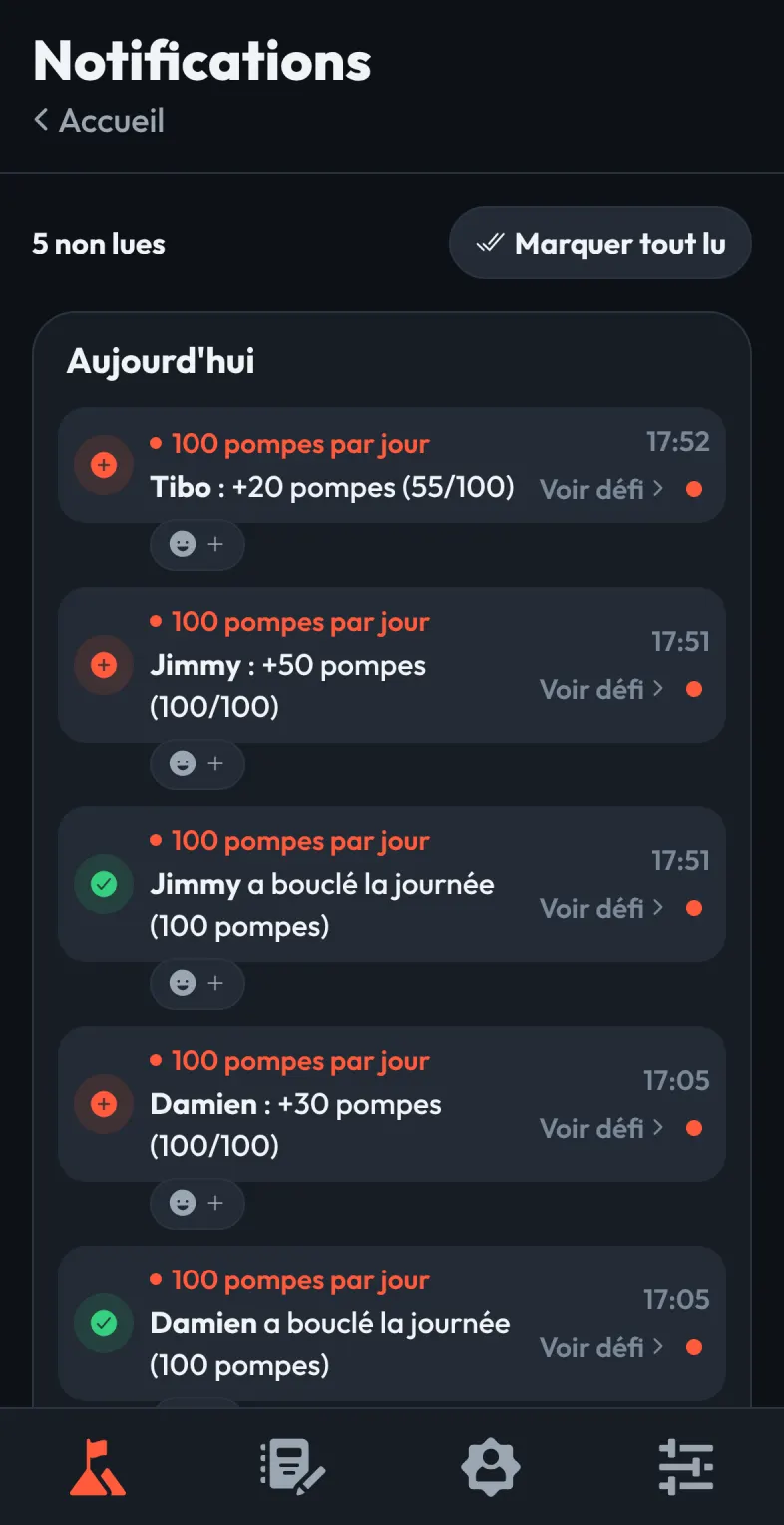
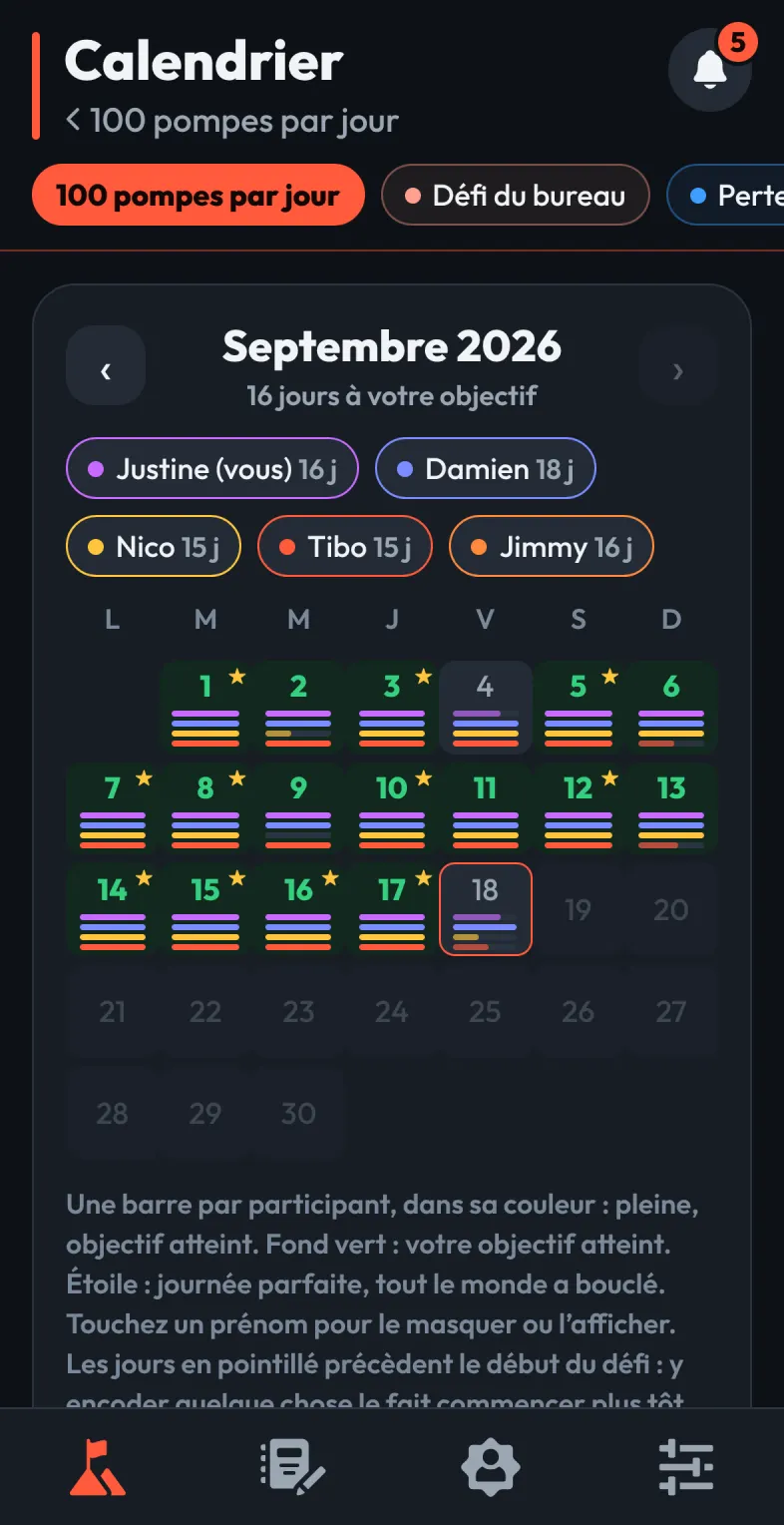
App screenshots in demo mode: the first names and figures are made up.
What it changes
- An idea tested by real users in a day, not a quarter.
- Fixes ship the same day, without waiting for a store review.
- Content that holds up to a demanding reader: in one research batch, 6 references out of 20 did not hold, and the famous “1953 Yale study” on goals does not exist. Those errors are not published.
Timeline
1 September 2026
The idea, the scoping and the first code
2 September 2026
Version 1.0 live in the browser
18 September 2026
The challengeus.app website and its first articles
6 October 2026
Version 1.58.3, with journal, timer and in-app support
Under the hood
- React Native
- Expo
- Supabase
- Cloudflare Workers
- Astro
- Web Push
- Claude Code
Limits and next steps
- Not on the App Store or Google Play yet: Brain Plus AI OÜ’s developer accounts open in November 2026.
- The app and the website are in French; English is planned.
- Native notifications are ready but wait for the store version; the browser already receives them.
- We do not publish usage figures, and the business model is not set yet.